The Fluidity and Subjectivity of Paintings

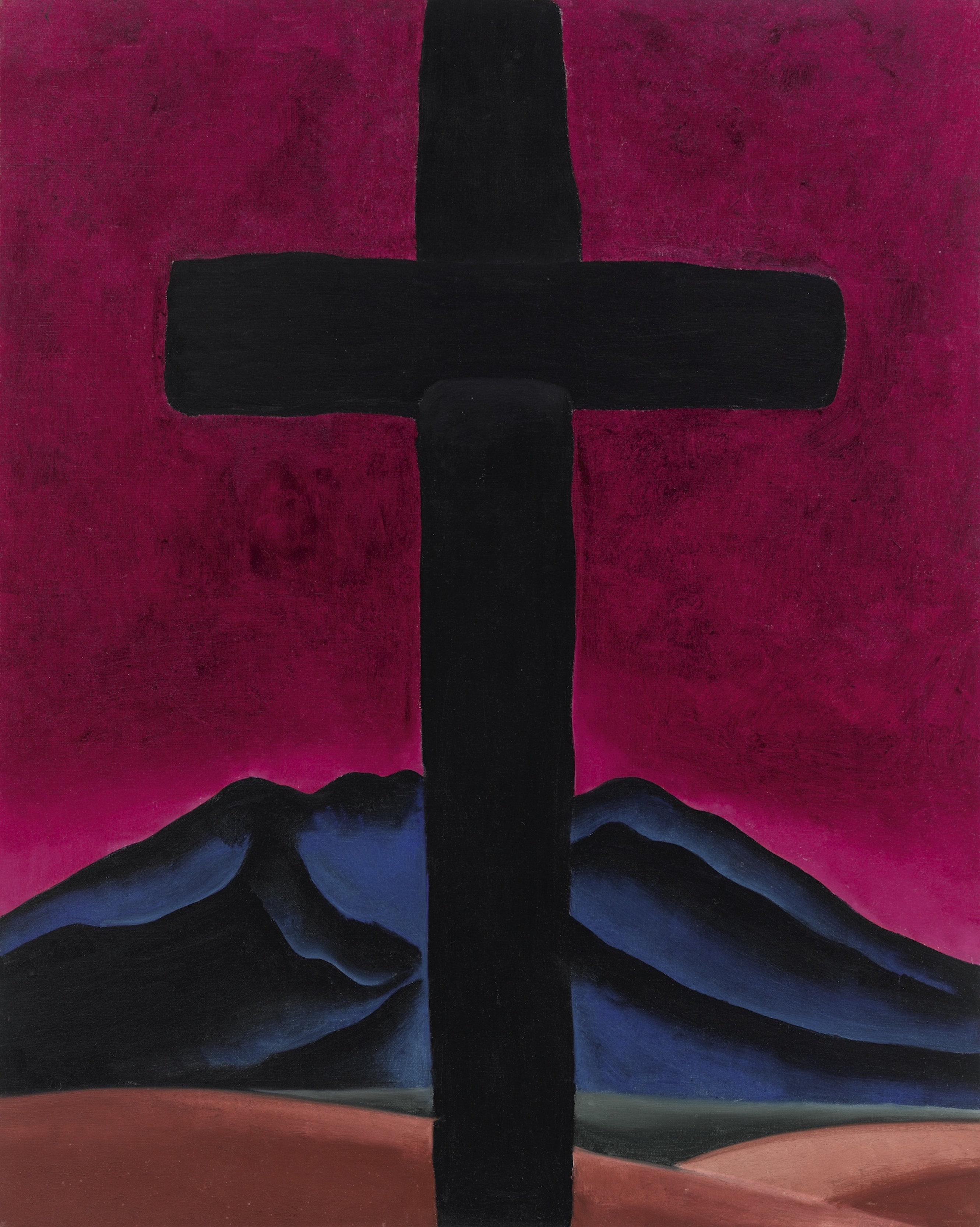
I was incredibly intrigued in our discussion on O’Keefe’s cross paintings to find, what I felt like, was a flip-flopping of interpretation in the conversation. At first, it seemed, like any other conversation, that we each held different opinions or were inspired in different ways by the paintings. But as we continued to explore different cross paintings in juxtaposition to one another, it felt as if two sides, two primary ways of interpretation were forming. Most obviously, this split arose in Mr. Connelly’s mention of the Black Cross with Red Sky being placed across from the Black Cross with Stars and Blue in the O’Keefe museum. Immediate reactions to the red sky of the second painting were obvious, but I felt myself confused. Where others had felt peace in the cross imagery, now they felt disruption. (Interestingly, the peace seemed renewed within the last painting we viewed of the Church Steeple, although possibly corrupted by a feeling of simplicity). As I viewed the Black Cross with Red Sky, however, I was torn between the two view points. On one hand I felt the fear and despair within the painting, on the other hand, I felt peace and comfort, and safety within its desolation, a knowledge that even in apocalyptic images a figure such as the cross could stand as an image of faith. In the next instance, the image of faith corrupted to one of prejudice and destruction. Most of all, our discussion of the painting confused and inspired me in the fluidity of paintings. Every time we view a painting are we changing it with ideas that we consider most important at the time? Does our mental state change (or even corrupt) the painting forever, or is that fluidity of interpretation that is place upon the painting exactly what it asks from us? Does the painting hold a memory of the feelings within it?


Comments
Post a Comment